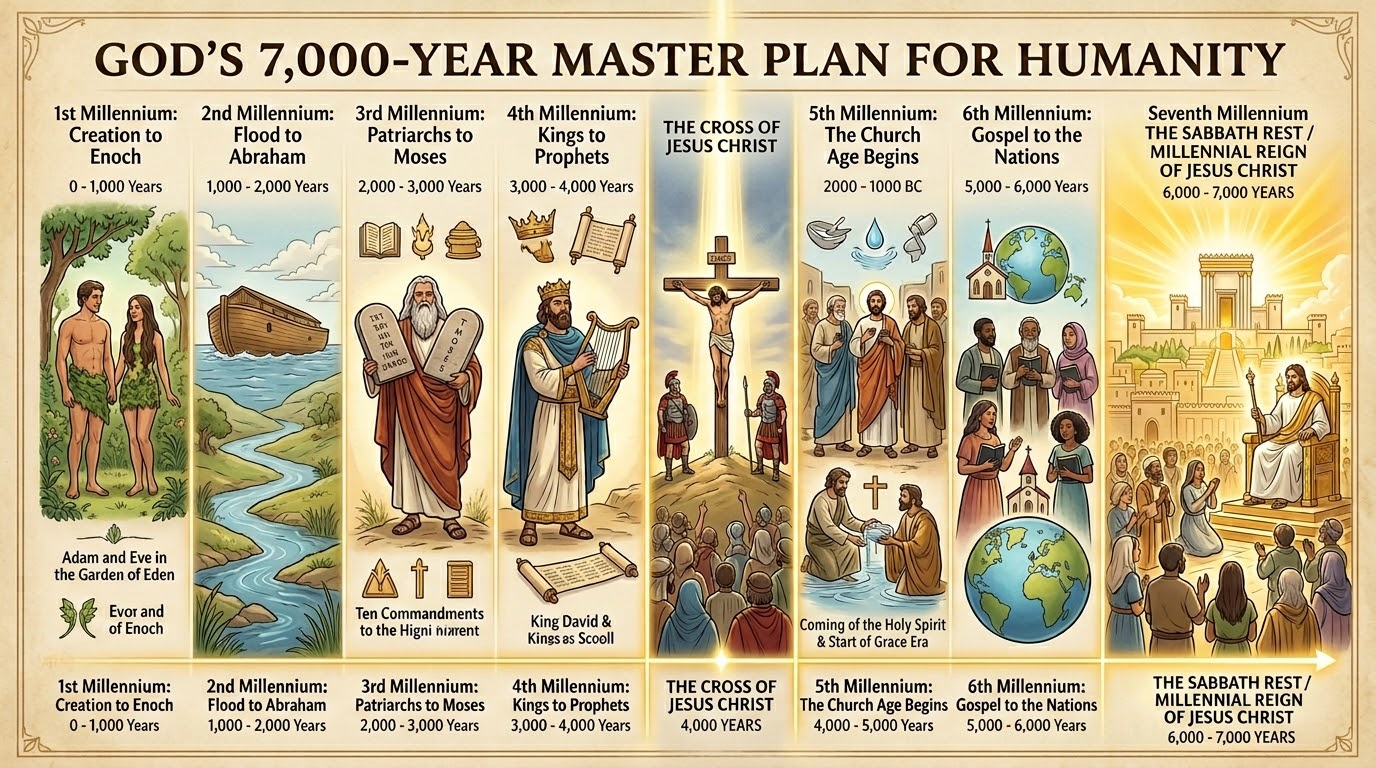
The seven annual feasts of Israel laid out in Leviticus 23 are known in Hebrew as the Moedim—a term meaning "appointed times" or "divine rehearsals." Far from being simple agricultural festivals or national remembrances for the historical events, these God given holy days form an overarching prophetic framework. They outline the entire trajectory of salvation history: the first coming and sacrifice of Jesus, the gift of the Holy Spirit, the birth and harvesting of the Church, the Rapture, and the eventual glorious Second Coming and Millennial Reign of Christ.
Let’s take a deep dive into the precise timing and mind-blowing prophetic significance of these seven feasts.
These seven Biblical feasts divided into 3 groups depending on at which time of the year they take place
First 3 in the spring, 4th one in the begging of the summer and then the remaining 3 in the fall season.
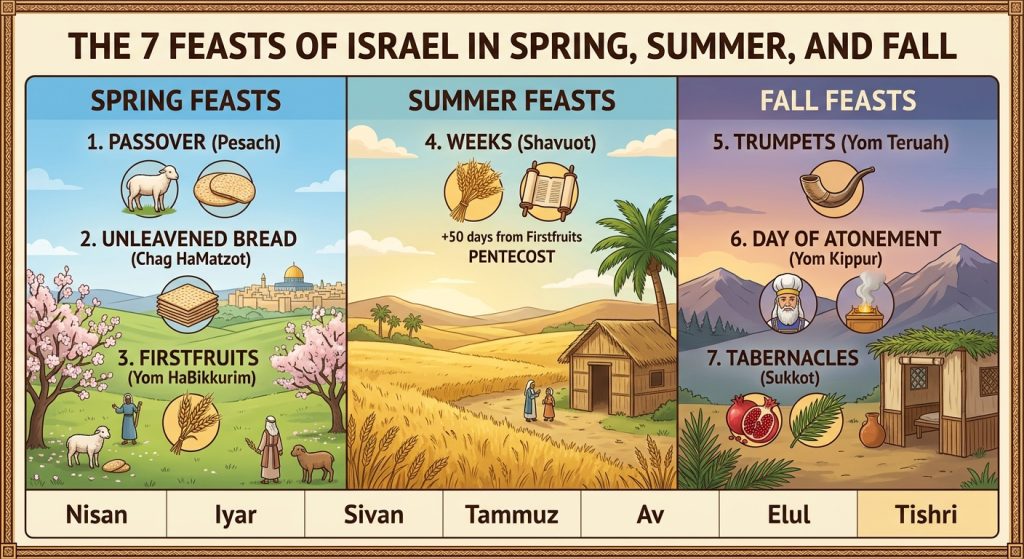
Although at first glance these feasts may appear as mere religious celebrations of seasons and God's seasonal provisions, beneath the surface, these feasts and their timing carry very important prophetic messages regarding Yeshua Ha Mashiach, (Jesus Christ), His first coming, His death and resurrection, the coming of the Holy Spirit, the birth and rapture of the Church, the 7 years of great tribulation for Israel, the second coming of Christ to save Israel and the 1000 long reign of Christ on earth.
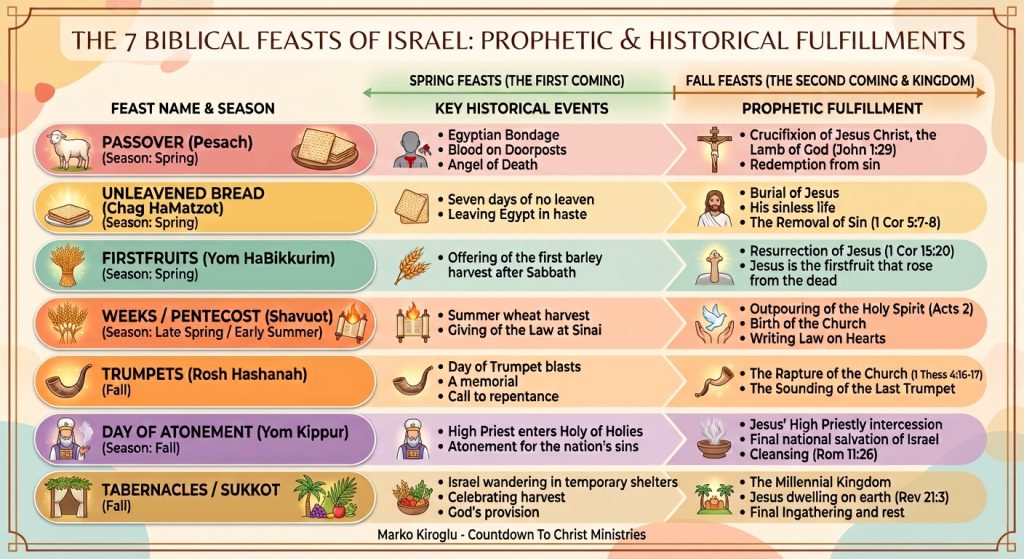
Phase I: The Spring Feasts — Death and Resurrection of Christ
The three spring festivals were fulfilled literally and sequentially to the exact hour during Jesus’ first coming and the immediate aftermath of His resurrection.
1. Passover (Pesach) — The Substitutionary Sacrifice
- Historical Practice: On the 14th of Nisan, an unblemished lamb was slaughtered, and its blood applied to the doorposts to save Israel’s firstborn from judgment.
- Prophetic Fulfillment: Jesus was crucified on the 14th of Nisan as the true Lamb of God (John 1:29; 1 Corinthians 5:7). His spilled blood delivers believers from the ultimate penalty of sin and death.
2. Feast of Unleavened Bread (Chag HaMatzot) — The Burial & Sinlessness
- Historical Practice: Beginning the day after Passover, Israel removed all leaven (a symbol of sin) from their homes for seven days, eating only unleavened bread.
- Prophetic Fulfillment: Jesus, the sinless "Bread of Life" (John 6:35), was placed in the tomb at the onset of Unleavened Bread. Because He bore no personal sin, His body experienced no decay or corruption while buried (Acts 2:27; Psalm 16:10).
3. Feast of Firstfruits (Yom HaBikkurim) — The Resurrection
- Historical Practice: Celebrated on the day after the Sabbath following Passover, the priest waved a sheaf of the first barley harvest before God, dedicating the forthcoming crop.
- Prophetic Fulfillment: Jesus rose from the dead on this precise Sunday, becoming "the firstfruits of those who have fallen asleep" (1 Corinthians 15:20). His bodily resurrection acts as the divine pledge that a greater harvest of believers will follow.
Phase 2: The Summer Feast — The Birth of the Church
4. Feast of Weeks (Shavuot / Pentecost) — The Holy Spirit & Birth of the Church
This feast of weeks (Shavuot/Pentecost) is right at the end of the spring and the beginning of the summer. Thus it can also be placed with the first three feasts into the spring season.
- Historical Practice: Counted 50 days (pente) from Firstfruits, it marked the end of the grain harvest and commemorated the giving of the Law on Sinai.
- Prophetic Fulfillment: On Pentecost, the Holy Spirit descended with fire upon the disciples gathered in Jerusalem (Acts 2). Instead of the Law written on stone tablets (which led to death, Exodus 32:28), the Holy Spirit wrote God's law directly onto human hearts, officially inaugurating the Church Age.
The Summer Gap: The Church Age
Between the spring and fall feasts lies a long summer dry season. In God’s prophetic timetable, this gap represents the current Church Age—a prolonged period during which the Gospel is preached across the world, drawing both Jews and Gentiles into a spiritual harvest before the fall feasts begin.
Phase 3: The Fall Feasts — The Rapture, Judgment, and Kingdom
Just as the spring feasts and the summer feast were fulfilled to the letter, the fall feasts represent divine appointments awaiting their literal fulfillment during Jesus’ Second Coming and the culmination of history.
Please pay attention; the very first next feast which still awaits its prophetic fulfillment points directly to the rapture of the church.
5. Feast of Trumpets (Rosh Hashanah) — The Rapture & Gathering
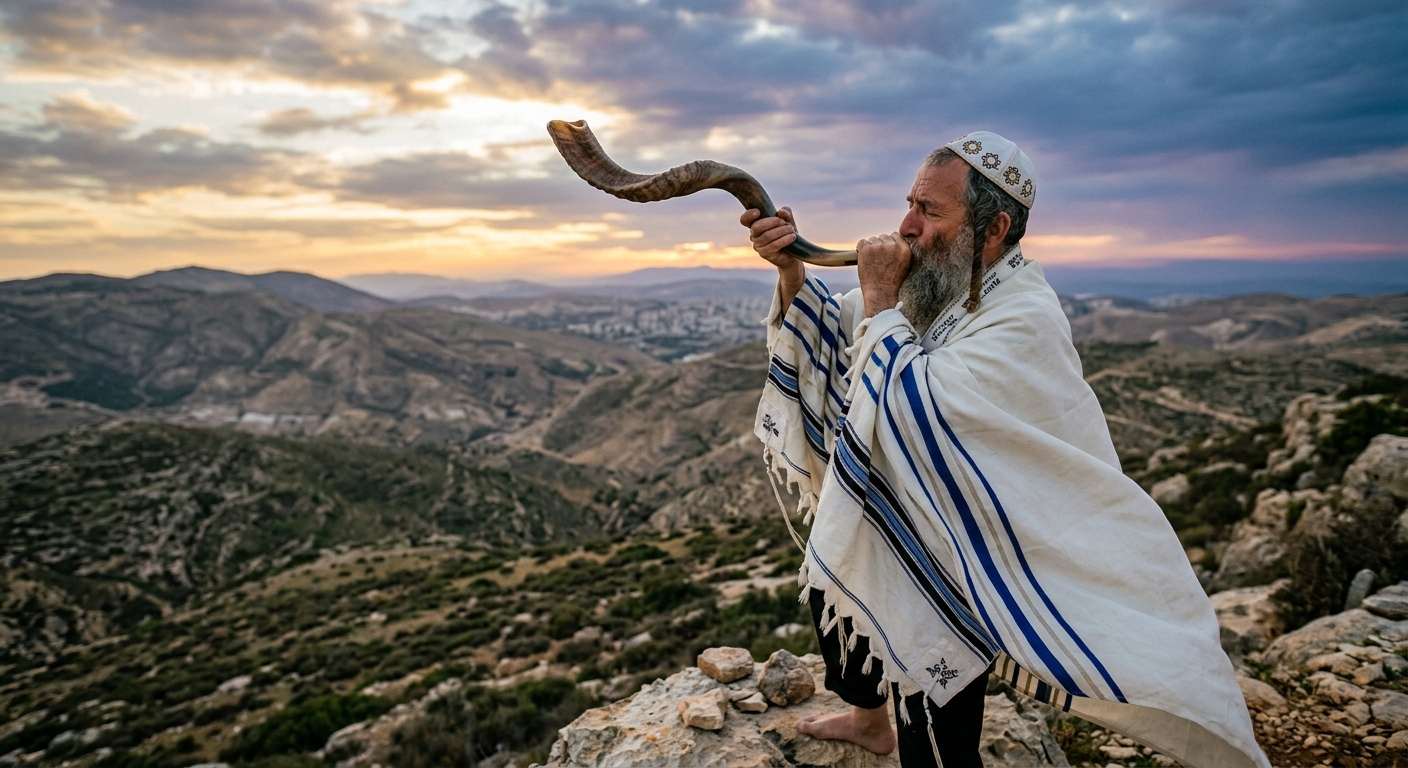
- Historical Practice: Marked by the blowing of the shofar (ram's horn) to wake up the people, sound a battle alarm, and call Israel to repentance.
- Prophetic Fulfillment: Points directly to the Rapture of the Church. At the sound of the "last trumpet," Christ will gather His bride, the dead in Christ will rise, and living believers will be caught up to meet Him in the air (1 Thessalonians 4:16–17; 1 Corinthians 15:52).
6. Day of Atonement (Yom Kippur) — National Cleansing & Second Coming
- Historical Practice: The most solemn day of Israel’s year, when the High Priest entered the Holy of Holies to make blood atonement for the nation's collective sins.
- Prophetic Fulfillment: Prefigures the physical Second Coming of Jesus to Earth at the end of the Great Tribulation. Upon His return, a remnant of Israel will look upon the One they pierced, mourn in repentance, and receive full national salvation (Zechariah 12:10; Romans 11:26–27).
7. Feast of Tabernacles (Sukkot) — The Millennial Reign
- Historical Practice: A joyful week-long celebration where Israel lived in temporary shelters (sukkot), remembering God’s presence dwelling among them during the wilderness journey.
- Prophetic Fulfillment: Anticipates the Millennial Kingdom, when Jesus will physically dwell ("tabernacle") among men and reign from Jerusalem for 1,000 years (Revelation 20:4; 21:3). All nations will travel to Jerusalem annually to keep this feast (Zechariah 14:16).